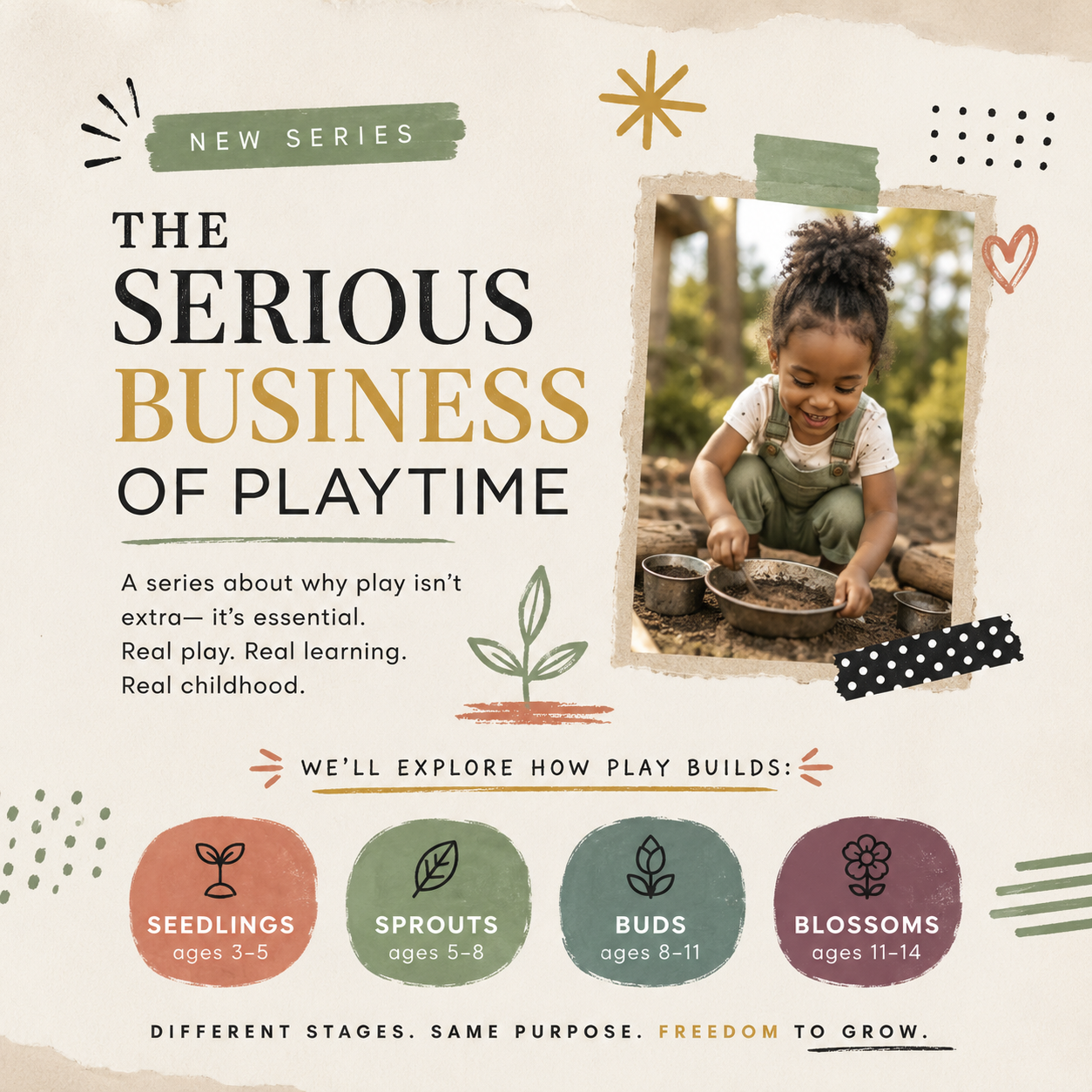
The Serious Business of Playtime: Seedlings (Ages 3-5)
“A three-year-old stacking blocks and knocking them down isn't wasting time between real lessons. That is the lesson.”
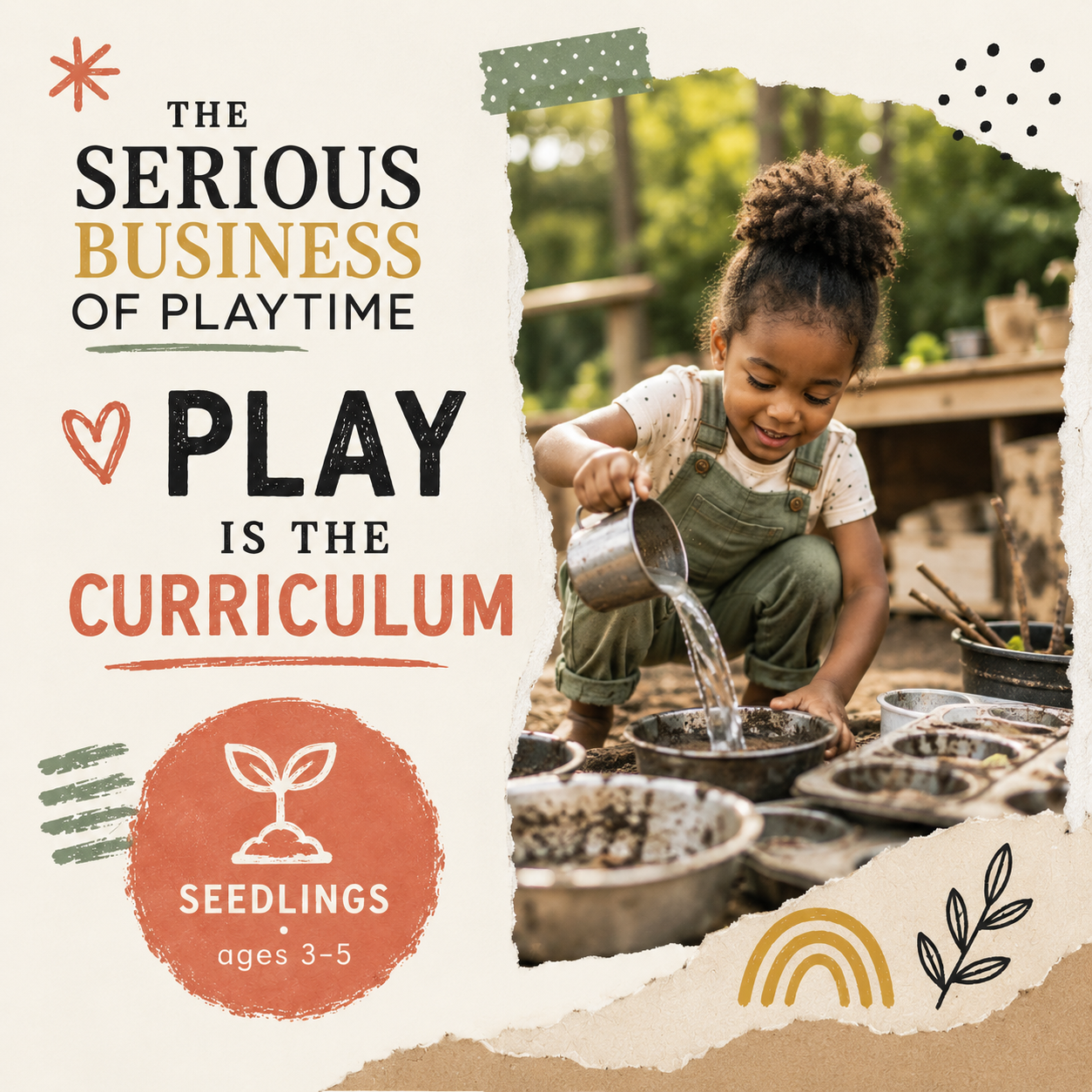
Watch a Seedling for ten uninterrupted minutes and you'll see a full curriculum happening without a single worksheet. A child pouring water between two cups is running an early physics experiment. A child pretending the couch is a pirate ship is rehearsing narrative structure, cause and effect, and the vocabulary of adventure. A child negotiating who gets to be the mama and who gets to be the baby is doing some of the hardest social work a human ever does — and doing it for fun.
This is why BGA treats unstructured, open-ended play as instructional time for Seedlings rather than a break from it. Fine motor control, oral language, early number sense, emotional regulation, and cause-and-effect reasoning are all being built simultaneously — through sand, water, blocks, dress-up bins, and the glorious repetition of the same pretend game for the fourth day in a row.
Under the surface
- Language explosion — narrating play multiplies vocabulary faster than direct instruction at this age
- Fine motor foundations — pouring, stacking, snipping, and squeezing build the hand strength handwriting will need later
- Early self-regulation — pretend play is where children first practice waiting, taking turns, and losing without a meltdown
- Executive function — deciding 'you be the dragon, I'll be the knight' and sticking to a plan is real cognitive work
Set out a bin of loose parts this week — bottle caps, fabric scraps, wooden spoons, a few empty boxes — and say nothing. Resist directing the play. Watch what your Seedling builds when there's no 'right' way to use the materials.
If your Seedling is spending an entire afternoon dumping a laundry basket of stuffed animals into a wagon and pulling it around the yard, they are not falling behind. They are exactly on schedule.