The Serious Business of Playtime: Sprouts (Ages 5-8)
“The kid running the pretend restaurant, taking orders and making change with acorns, is doing math you didn't assign.”
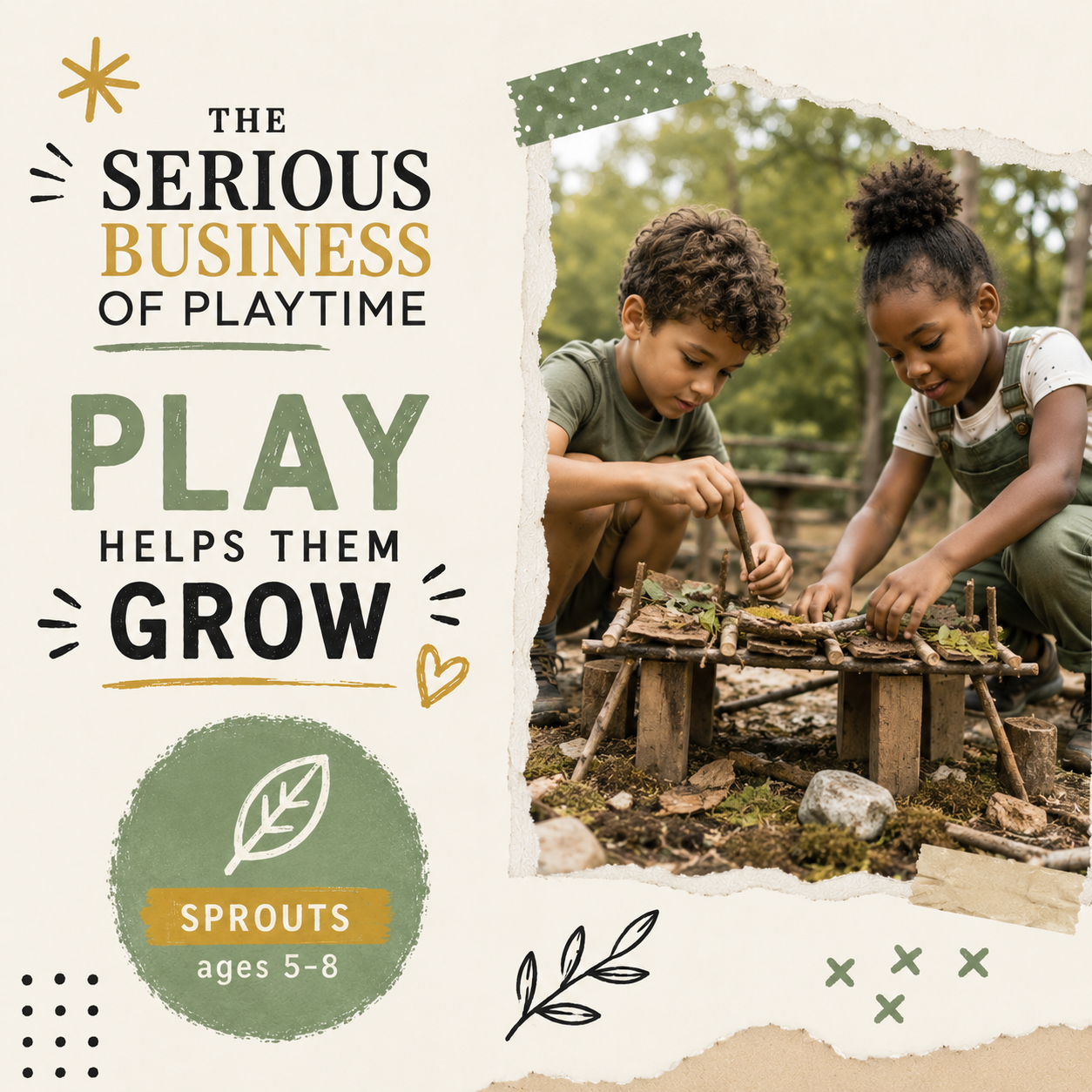
Sprouts don't just play — they build worlds. A shoebox becomes a school. A backyard becomes a kingdom with laws about who can enter and what happens if you don't knock first. This kind of socio-dramatic play — sustained, rule-governed, story-driven — is one of the strongest predictors of early literacy and self-regulation research has found, because it requires exactly the skills reading and writing will demand: holding a narrative in your head, keeping track of characters, and revising the plan when a plot hole appears mid-scene.
It's also where Sprouts practice negotiation in its purest form. 'That's not fair, you can't just be the boss of the game' is a real argument about justice, made by a seven-year-old, with real stakes to that seven-year-old. BGA's Rooted in Stories and Rooted in Reading strands are built with this in mind — Sprouts are natural storytellers already; the curriculum meets them there rather than starting from zero.
Under the surface
- Narrative structure — sustained pretend play builds the same 'beginning, middle, end' thinking that comprehension depends on
- Negotiation and fairness — working out game rules with peers is early moral reasoning, not just conflict
- Symbolic thinking — a stick becoming a sword or a wand is the same mental leap letters-as-sounds will require
- Stamina — a pretend game that runs for three days straight is genuine sustained attention, just not at a desk
This week, let a pretend game run longer than feels productive — across an afternoon, or a few days. Ask to be assigned a role instead of directing. Notice how much negotiating, remembering, and story-building your Sprout does without prompting.
A messy fort with a hand-lettered 'no grown-ups' sign isn't a mess to clean up before real learning starts. It's evidence the real learning already happened.