The Serious Business of Playtime: Blossoms (Ages 11-14)

“A Blossom spending three hours perfecting a TikTok edit or building an elaborate D&D character isn't procrastinating. They're rehearsing who they are.”
Somewhere around eleven, play stops looking like play — at least by the definitions most adults grew up with. It becomes writing an elaborate backstory for a tabletop character, remixing a song a hundred times until it's right, building an entire Minecraft city with zoning laws, or staying up late perfecting choreography for a dance no one assigned. It's easy to mistake this for a hobby or a distraction. It's closer to identity formation — low-stakes experimentation with who a person is going to become, run through the safe medium of a game or a creative project instead of real-world consequences.
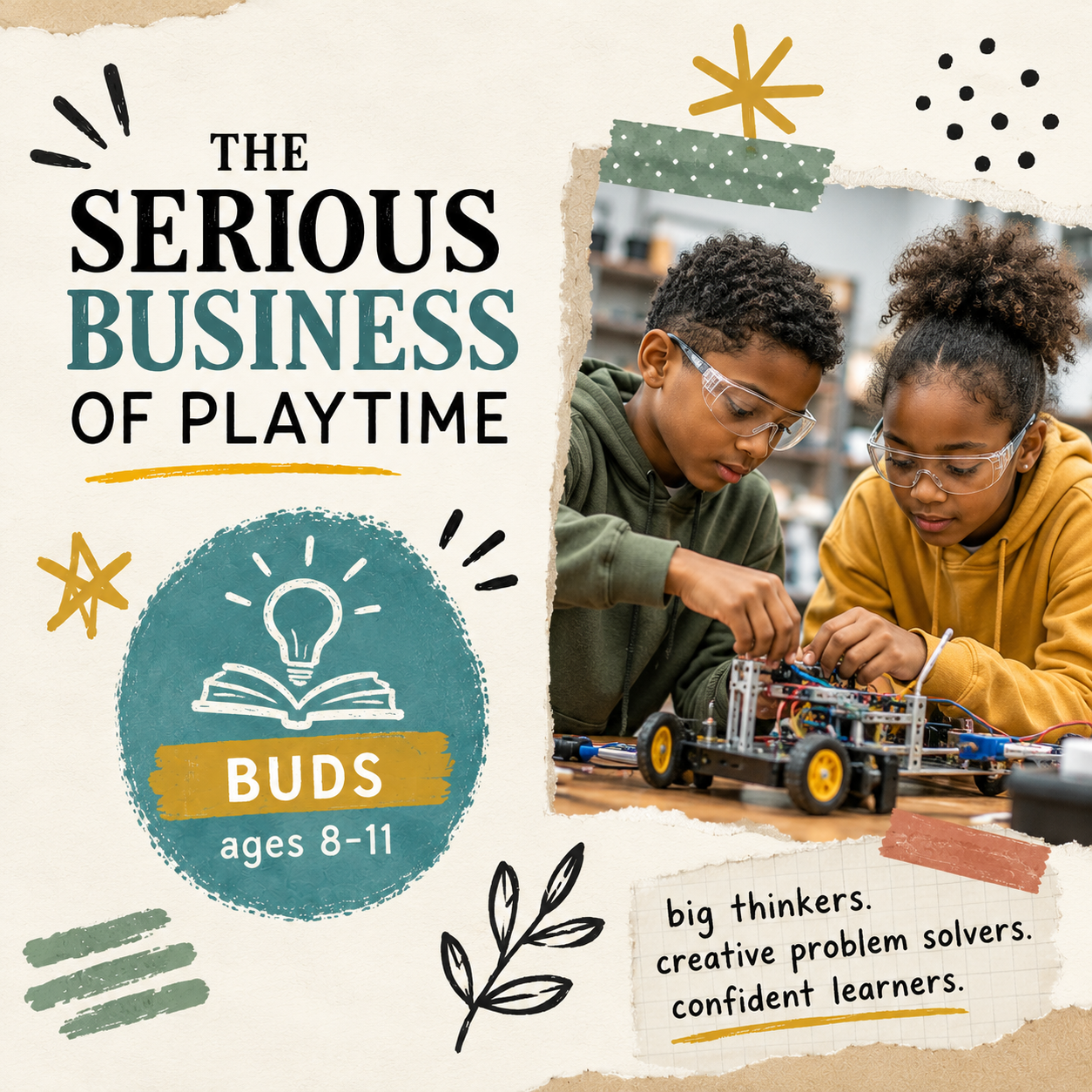
This is also where maker play and passion projects earn their place in the curriculum instead of being treated as an elective add-on. A Blossom who spends a weekend building and rebuilding a stop-motion film is doing iterative revision, project management, and creative risk-taking — the exact skills a capstone or portfolio piece will ask for later. BGA's Q4 entrepreneurship and showcase quarter exists because this age band is already doing ambitious creative work; the curriculum just gives it a stage.
Under the surface
- Identity experimentation — trying on personas through characters, avatars, and creative projects is safe, low-stakes self-discovery
- Iterative revision — redoing a video, a build, or a piece of writing until 'it's right' is genuine creative process, not perfectionism to correct
- Project ownership — self-directed creative projects build the planning and follow-through a portfolio or capstone will require
- Peer culture literacy — shared games, shows, and trends are how tweens practice belonging and social read
Ask your Blossom to show you the project they've put the most unassigned hours into this month — a build, an edit, a character, a playlist. Ask genuine questions about their choices instead of evaluating it. Notice the depth of thought already there.
The version of play that looks like 'just being on a screen' is often the most serious identity work happening in your house all week. It's worth a second look before it's dismissed.